


Frequently bought together:
Description
The Paprsky Cable Lugs Crimping Tool PT-CLCT-302 is a precision-crafted, highly dependable manual hand tool tailored for fastening non-insulated terminals and cable links. Engineered for intuitive operation and steady output, it delivers a sturdy crimp that successfully handles cable sizes between 1.25mm² and 16mm². With its rugged build and fatigue-reducing grip, it guarantees secure, error-free electrical joints, serving as a critical asset for professional electricians, panel fabricators, and maintenance crews tackling repetitive jobs.
Technical Specifications
| Specification | Detail |
| Range of Application | Non-insulated Cable Links |
| Point Capacity | 1.25-16mm² |
| AWG | 16-5.0 |
| Weight | 0.45 KG |
| Dimensions (LxWxH)(MM) | 340X135X105 |
Key Features
- Precision Mechanical Crimping: Generates a firm, uniform mechanical press that boosts the contact surface and significantly lowers electrical resistance for flawless connectivity.
- Versatile Capacity Range: Equipped with a seamlessly integrated die mechanism designed to easily handle typical non-insulated cable links ranging from 1.25mm² to 16mm².
- Ergonomic Operation: Features finely balanced, comfort-grip handles that drastically minimize hand strain during high-volume crimping tasks, even in tight areas.
- Durable Industrial Construction: Constructed from top-grade, heavy-duty materials built to endure demanding job sites while delivering outstanding, sustained mechanical advantage.
Applications
- Electrical Terminations: Perfect for securely anchoring non-insulated aluminum or copper lugs to exposed wire conductors.
- Control Panels & Switchgear: A vital instrument for professionals tasked with wiring and terminating connections within circuit breakers, switchboards, and industrial control systems.
- General Electrical Maintenance: Outstanding for everyday commercial power repairs, vehicle wiring projects, and standard facility power networks.
Related Products
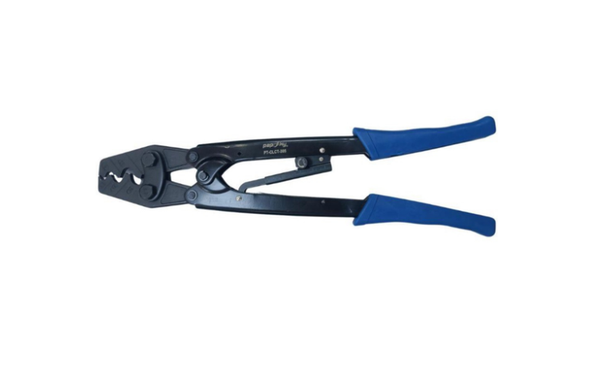
CABLE LUGS CRIMPING TOOLS PT-CLCT-305
PAPRSKY
The Paprsky Energy Cable Lugs Crimping Tool PT-CLCT-305 is a precision-designed manual tool developed for securely fastening non-insulated

CABLE LUGS CRIMPING TOOLS PT-CLCT-304
PAPRSKY
The Paprsky Cable Lugs Crimping Tool (PT-CLCT-304) is a premium, heavy-duty manual tool engineered to create secure crimps on non-insulated terminals and cable links. Designed to optimize both...
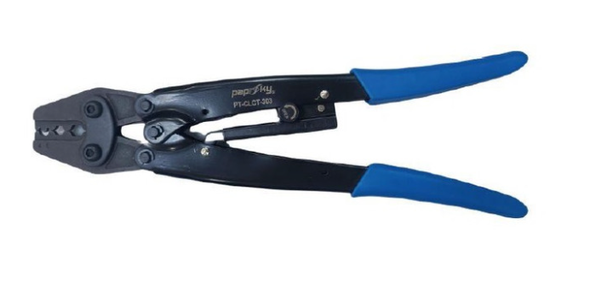
CABLE LUGS CRIMPING TOOLS PT-CLCT-303
PAPRSKY
The Paprsky Cable Lugs Crimping Tool (PT-CLCT-303) is a highly precise, ultra-lightweight hand tool engineered to firmly crimp non-insulated terminals and cable links. Crafted for effortless...
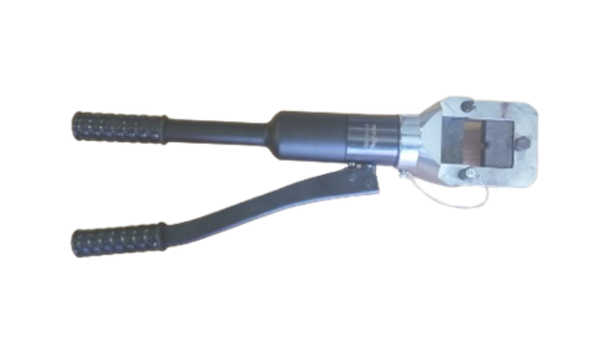
HYDRAULIC CRIMPING TOOLS PT-HCT-282
PAPRSKY
The Paprsky Hydraulic Crimping Tool (PT-HCT-282) represents the next generation of high-performance cable crimping technology, designed for maximum efficiency and exact precision. Equipped with a...
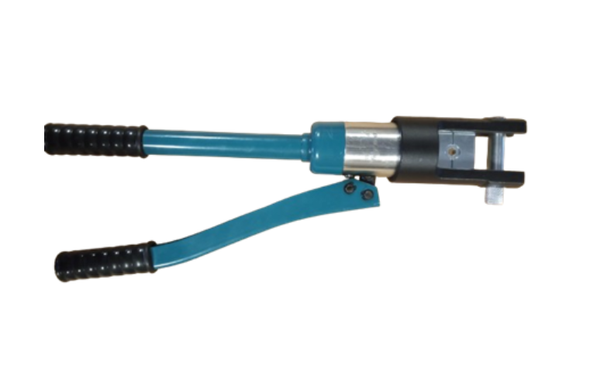
HYDRAULIC CRIMPING TOOLS PT-HCT-281
PAPRSKY
The Paprsky Energy Hydraulic Crimping Tools (PT-HCT-281) represent a breakthrough in second-generation press technology, integrating high-tech engineering with an advanced oil pathwa